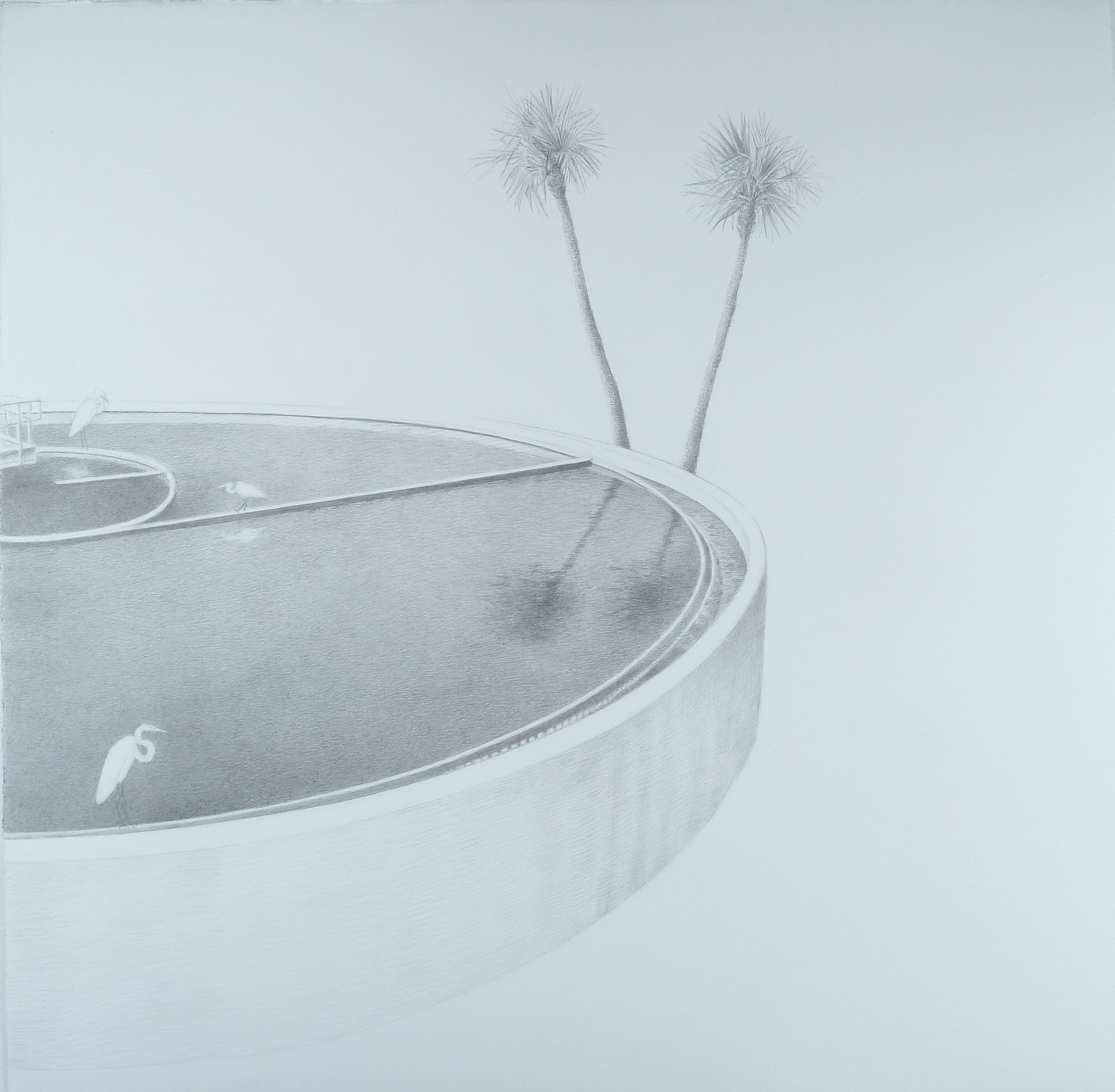
“Oasis”, graphite on paper, 2014
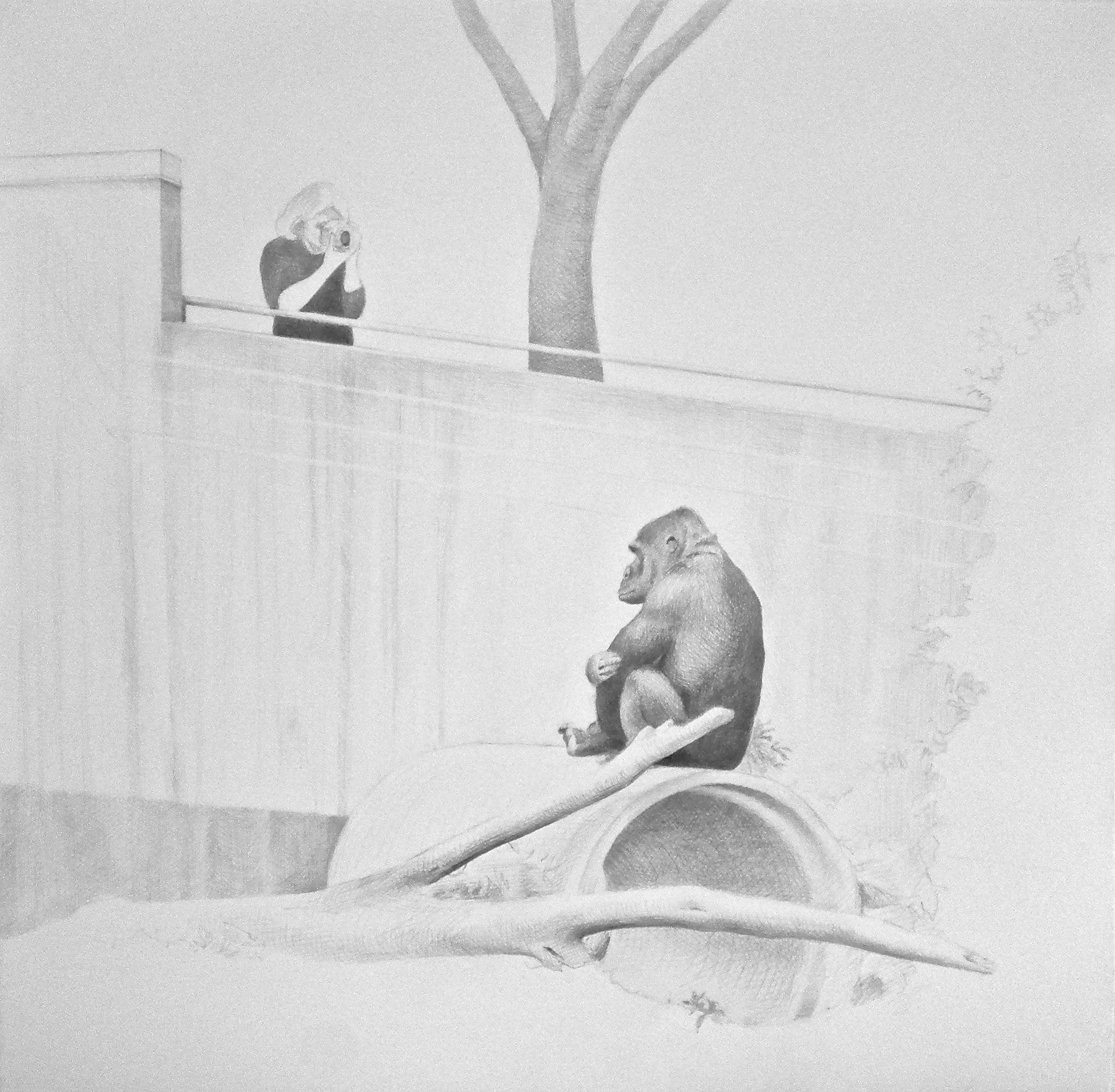
“Reflection”, graphite on paper, 2014
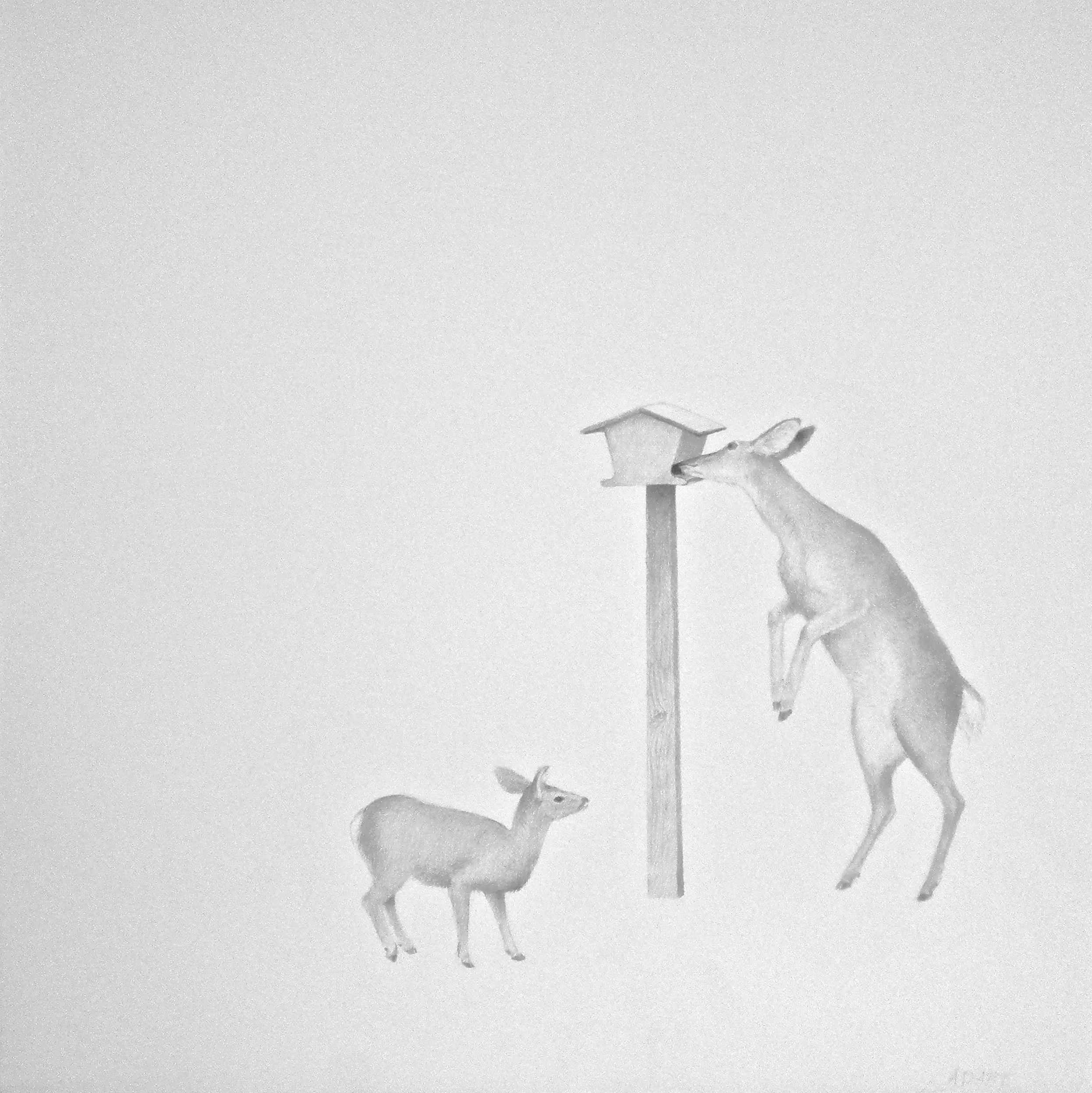
“Adapt”, graphite on paper, 2014
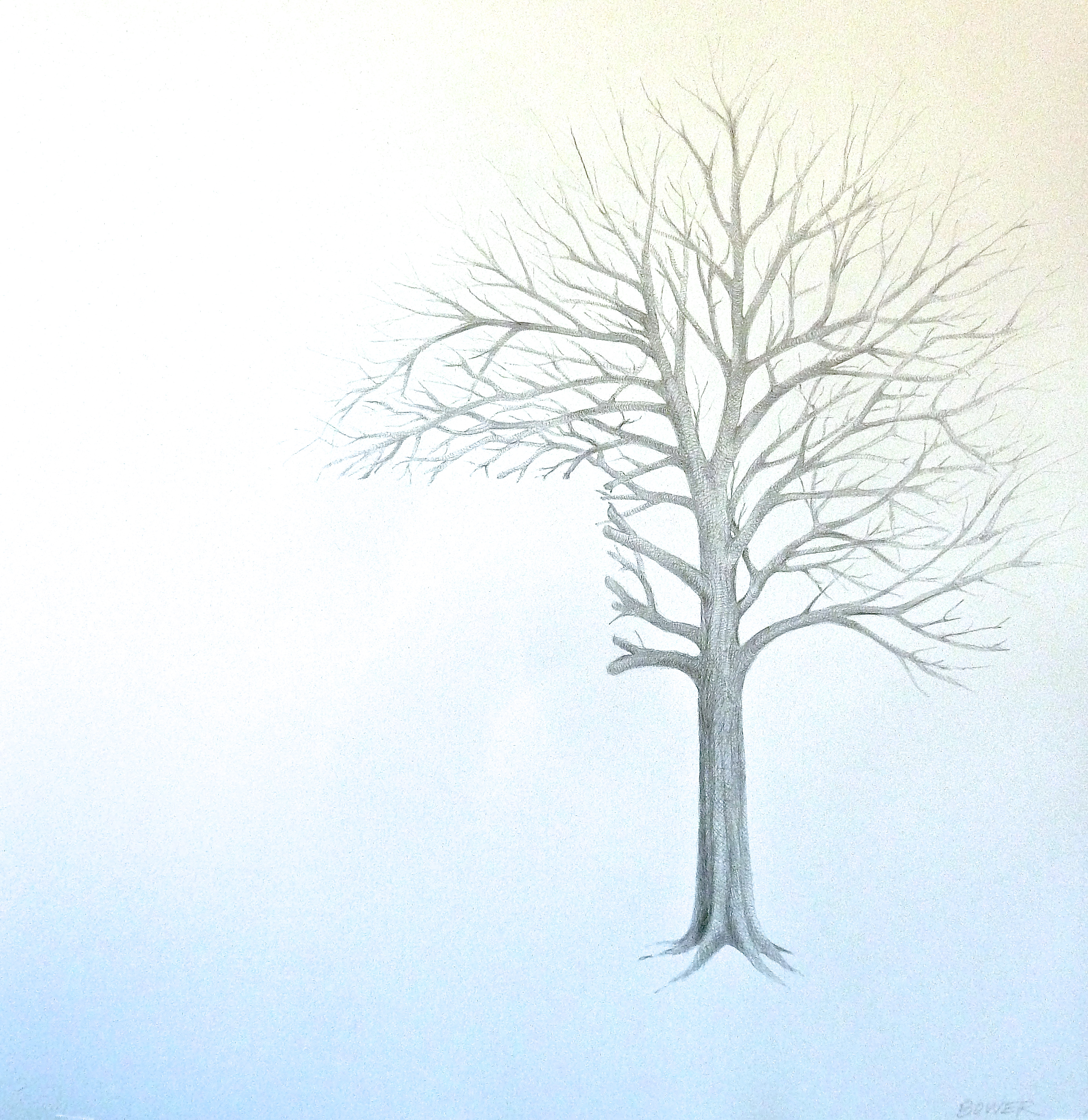
“Bower”, graphite on paper, 2014

“Repurpose”, graphite on paper, 2014

“Invasive”, graphite on paper, 2014

“Oasis”, graphite on paper, 2014
“Reflection”, graphite on paper, 2014
“Adapt”, graphite on paper, 2014
“Bower”, graphite on paper, 2014
“Repurpose”, graphite on paper, 2014
“Invasive”, graphite on paper, 2014
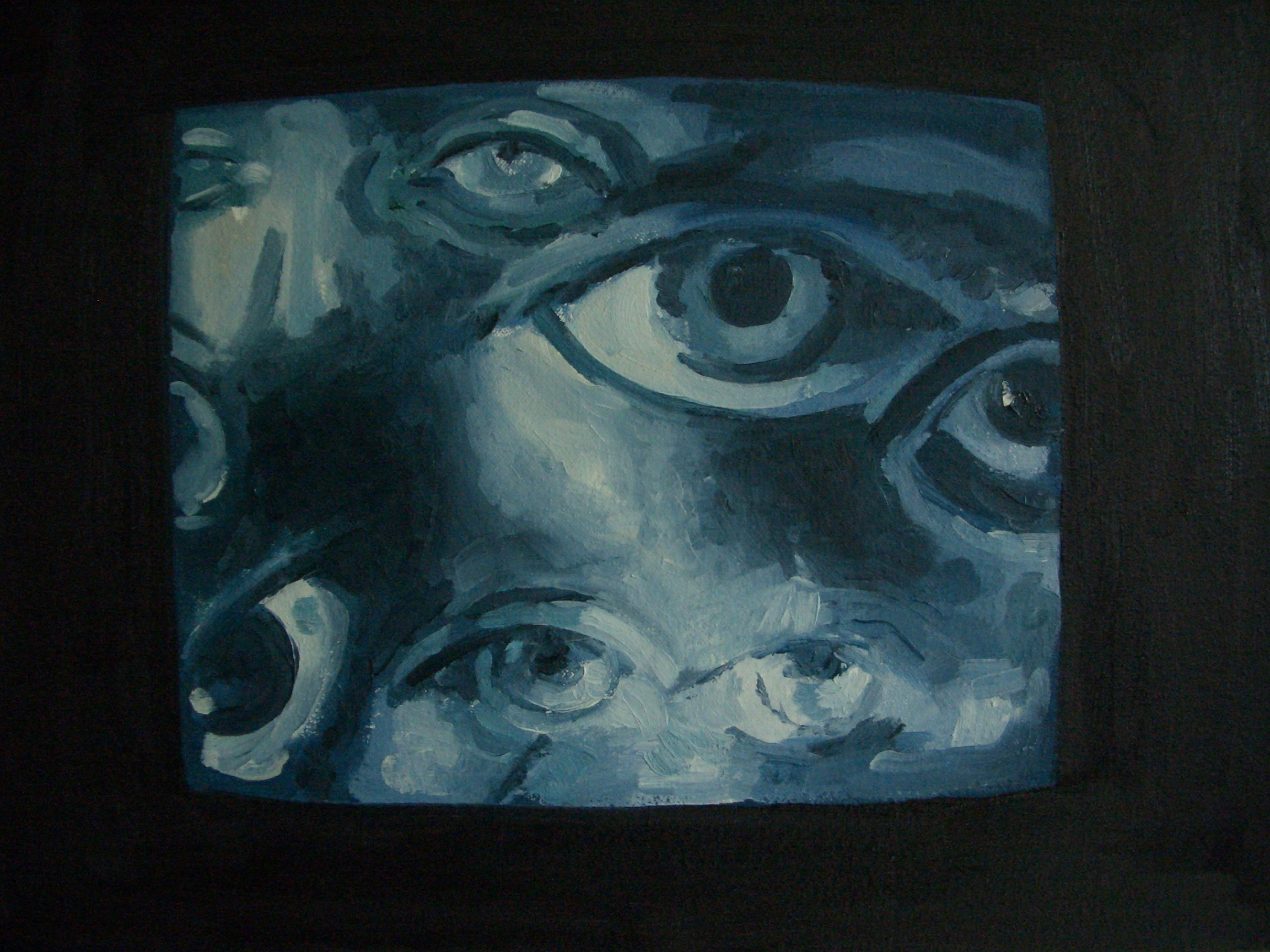
“The Gaze” oil on canvas, 2005
In a reprise of a 2005 exhibition* about the media, I will be showing a selection of paintings from a series entitled, “Illusions of News”, at the Associates’ Pop-Up Gallery in Alexandria’s Torpedo Factory, now through Oct. 19, in Studio 12, next to the main stairs.
Inspired by the movie, “Network”, the original series began as a response to news events but became more focused on how the news frames and filters information to draw in viewers without actually contributing to a meaningfully informed citizenry. We are awash in a sea of information, as media technology seeks to engage our attention through a constant stream of images. How to absorb, digest and understand the incessant barrage?
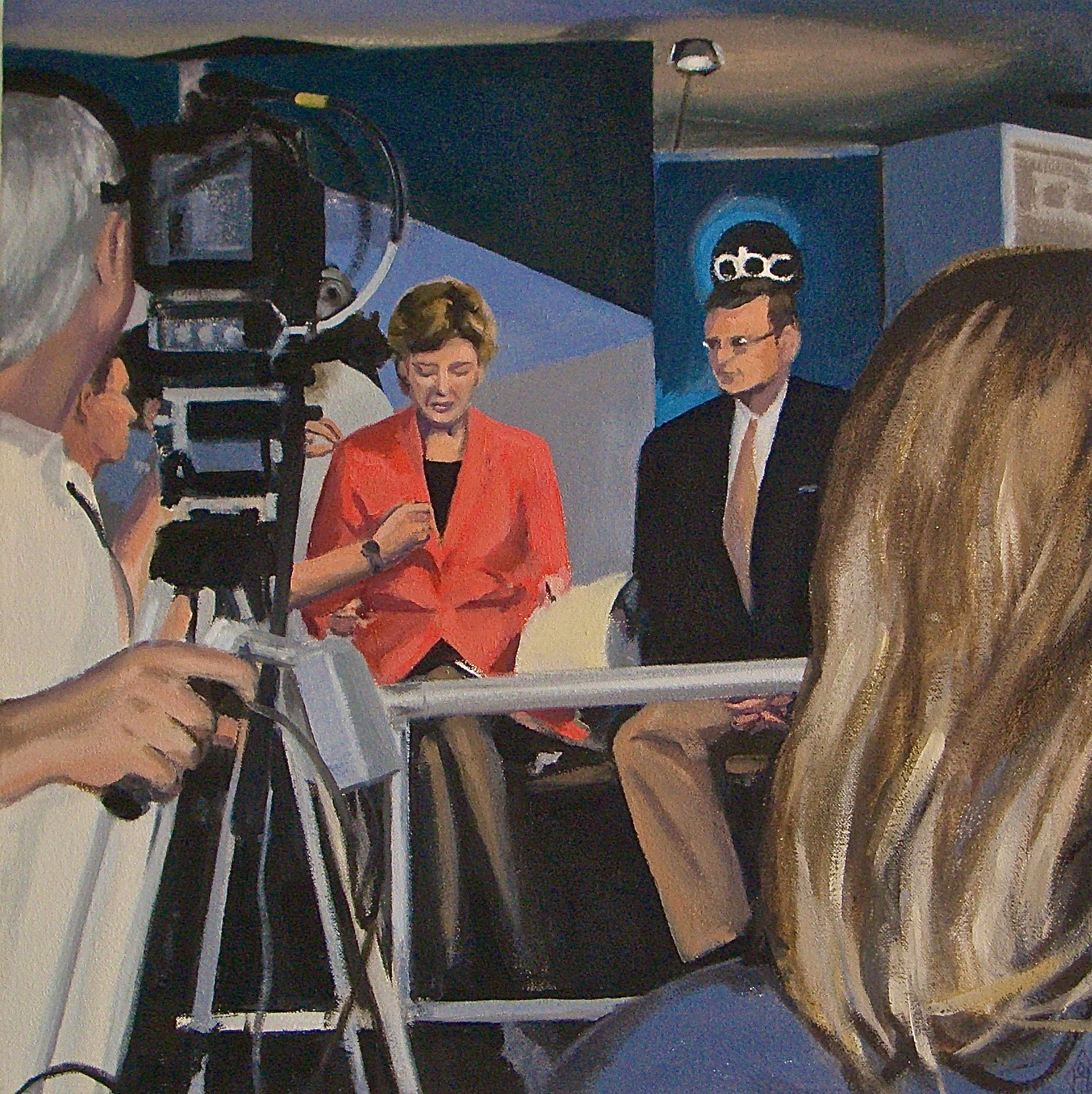
Camera Ready, oil on canvas, 16″ x 16″, 2005
As we plug in our various screens, certain stimuli are devised to evoke measurable changes in blood-pressure. Through these portals we vicariously witness the horrific, suffer the righteous indignation of political opposition, are spell-bound by the outlandishly stupid and enticed or repulsed by the prurient and lewd. We feel the odd torque of emotions wrought by the juxtaposition of the dangerous with the helpless as we are shown a lion playing with a baby gazelle, or a pit-bull licking a kitten. We succumb to the soporific calm induced by the heart-melting tenderness of tiny animals. Lured by easy consumption, our attentions are reduced to ratings data, as our every click and tic is recorded and plugged into the overarching algorithm.

Four images hung together – “Covered in Puppies”, Surveillance #2, “Indicted”, White House Press Corp Walkling Shot, #1
Oil on linen, canvas or wood panel
To make a painting is to slow down the process of seeing, to internalize the visual by reclaiming the image for oneself as a new object. Generating something with one’s own hands is to externalize one’s ideas, to have a physical confirmation of thinking, and through that process, more fully understand the profound difference between a vicarious contrivance and actual lived experience. Painting is a manifestation of authentic human thought.

White House Press Corp, walking shot #2, oil on canvas, 2005
* The original “Illusions of News” exhibition took place at Redux Contemporary Art Center in Charleston, SC, December 2 – 31, 2005.
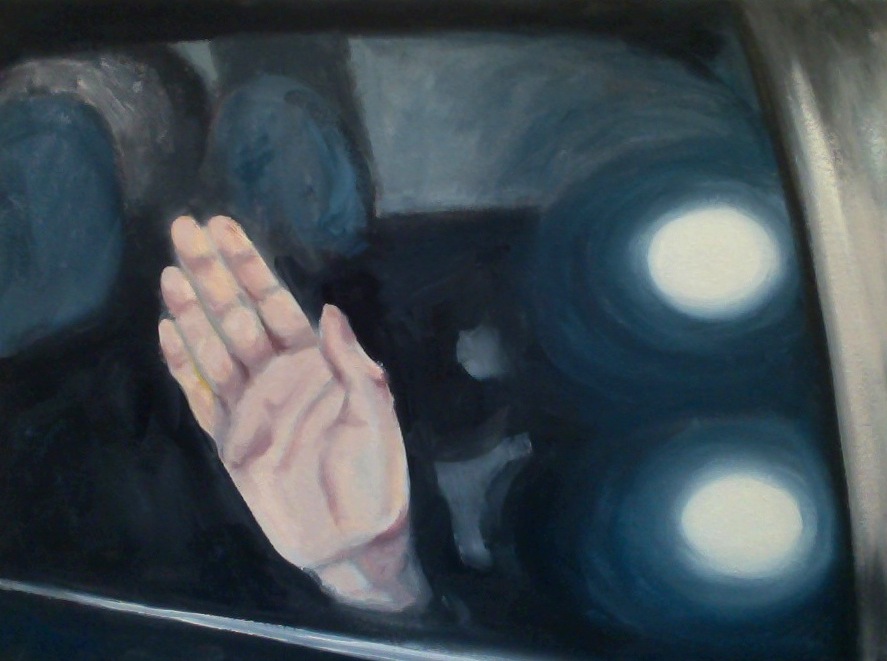
“No Pictures”, oil on canvas, 14″ x 18″
Insomnia at the beach. Thoughts keep coming to me without my wanting them or not wanting them. I try to pin them down but end up chasing thoughts like little minnows darting from a net. The net I was using were key words like – “human impulses” or “the land bears all our sorrows”. Here’s what turned up:
The land bears all with its own grace, apart from human opinion.
A place is haunted by human memory, as long as people are around to remember.
After that, memory is on it own.
Accord – how to reach accord with nature?
As the ages shall roll, may the circle be unbroken.
All these minnowy thoughts emanating from the death of a young woman at the Pfafftown farm this past spring, from an apparent suicide; it was an impulsive act with far-reaching reverberations within the community, cascading fall-out for the lives of those involved as well as those who barely knew her. She was a beautiful, aspiring, art student whose potential was curtailed by a highly questionable relationship, early motherhood, and subsequent poverty, all formidable but solvable problems. The gun was a permanent solution to a temporary situation.
People mostly die in the confines of buildings, but she was found outdoors, in a section of clear-cut that was growing back, in an inhospitable, scratchy place full of brambles and thorns. The human drama still unfolds as it will, but what of the place where she fell? Is it somehow cursed because of this? Will it be haunted? I’m not talking about ghosts here, but memories written in the land.
People have lived and died on the land for thousands and thousands of years. Civilizations come and go. The land bears them all; sees their joy, their rage, and their ultimate demise and it endures, degraded but dispassionate. With its own grace, apart from human opinion, the land bears all types of human labor, human tragedy, human ambition rife with folly.
Is the land haunted by past lives? A place is haunted by memory, as long as people are around to remember. After that, memory is on its own, buoyed by evidence or artifact, of interest to the curious subsequent intellect. This is what haunting really is – unfulfilled potential, misspent lives, squandered possibilities, remembrance of the brevity of existence through the eroding evidence of the past.
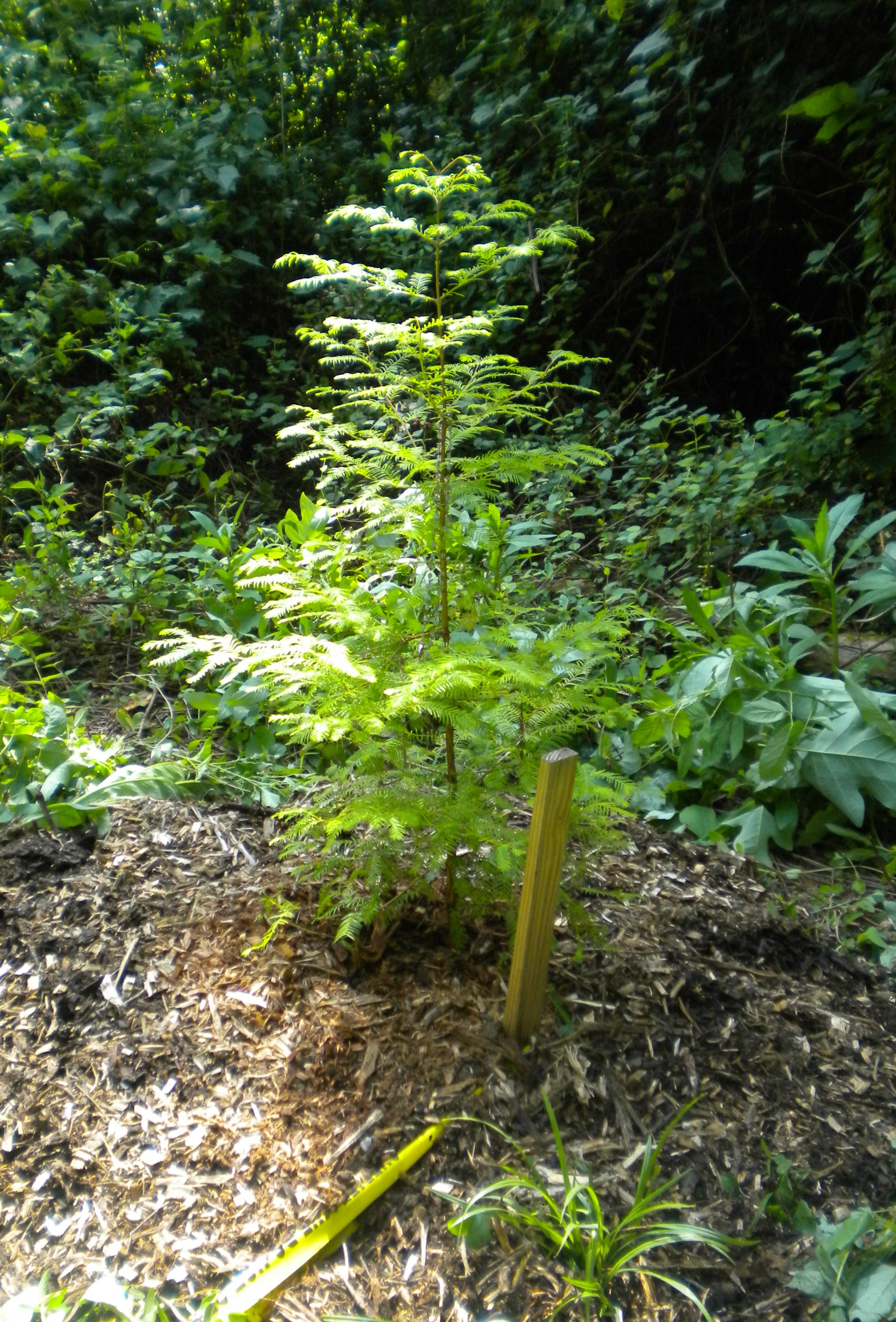
We were planning a trip to visit around Easter when I heard the news, and I was already bringing some small saplings we had started on the deck to maybe plant around the pond. One looked particularly hearty so we decided to plant it where she fell, after the police were done with their investigations. We were all so deeply disturbed by the whole event, the shadowy circumstances, the complete lack of reason behind it all. Her motivations seemed so murky, leaving the community in sad disbelief. All I could think of was – if in doubt, plant a tree.
This tree is a dawn redwood, or Metasequoia glyptostroboides, an ancient species once thought extinct but has been propagated from a residual stand found in China in 1948. If it thrives, it will be a giant, dwarfing the surrounding oaks and pines. Forty years from now, the rosary that hangs on its branches will likely be gone, but if there’s good rain, it could be over fifty feet tall with a trunk over eight feet wide, eventually reaching over a hundred feet tall.
Answering a need for continuity, not through ego like a pharaoh’s tomb, but germinating from a sense of stewardship, of leaving something better than you found it. The land best keeps what it can make thrive.
T.S.I.
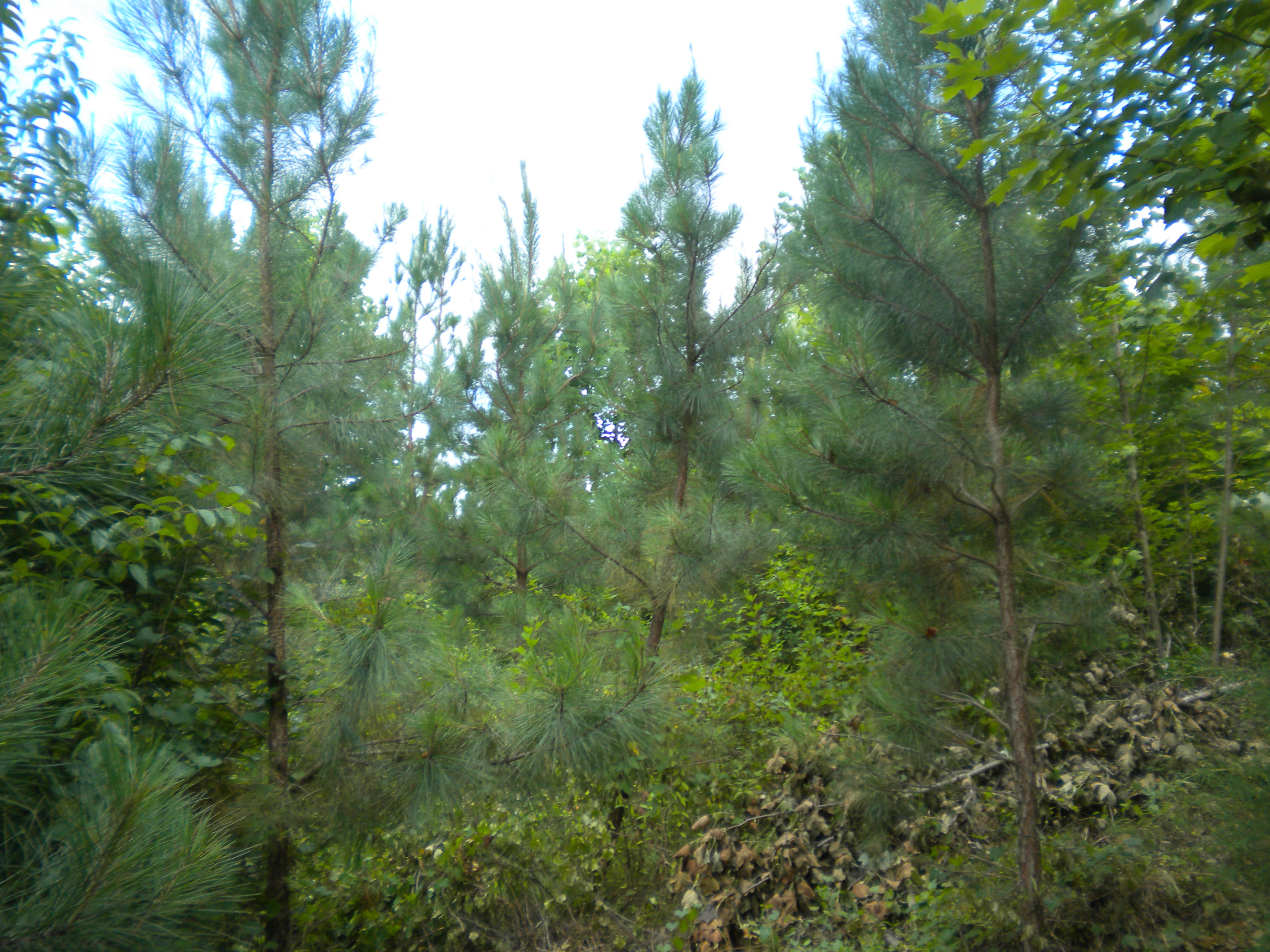
I spent a couple of days out in the woods with my brother, learning the meaning of a new acronym – TSI. Timber Stand Improvement. Using a pair of loppers and a gas powered weed-eater with a rotary saw attachment, we were cutting a path through a thick underbrush of privet, wild grapevine, honeysuckle, blackberry briars, wild rose bush, and trifoliate orange to make our way to a stand of recently planted long-leaf pine, which were being overgrown by several species of native and invasive saplings. It’s hot, dirty work, but gives you a real sense of accomplishment to carve your way through thick underbrush.
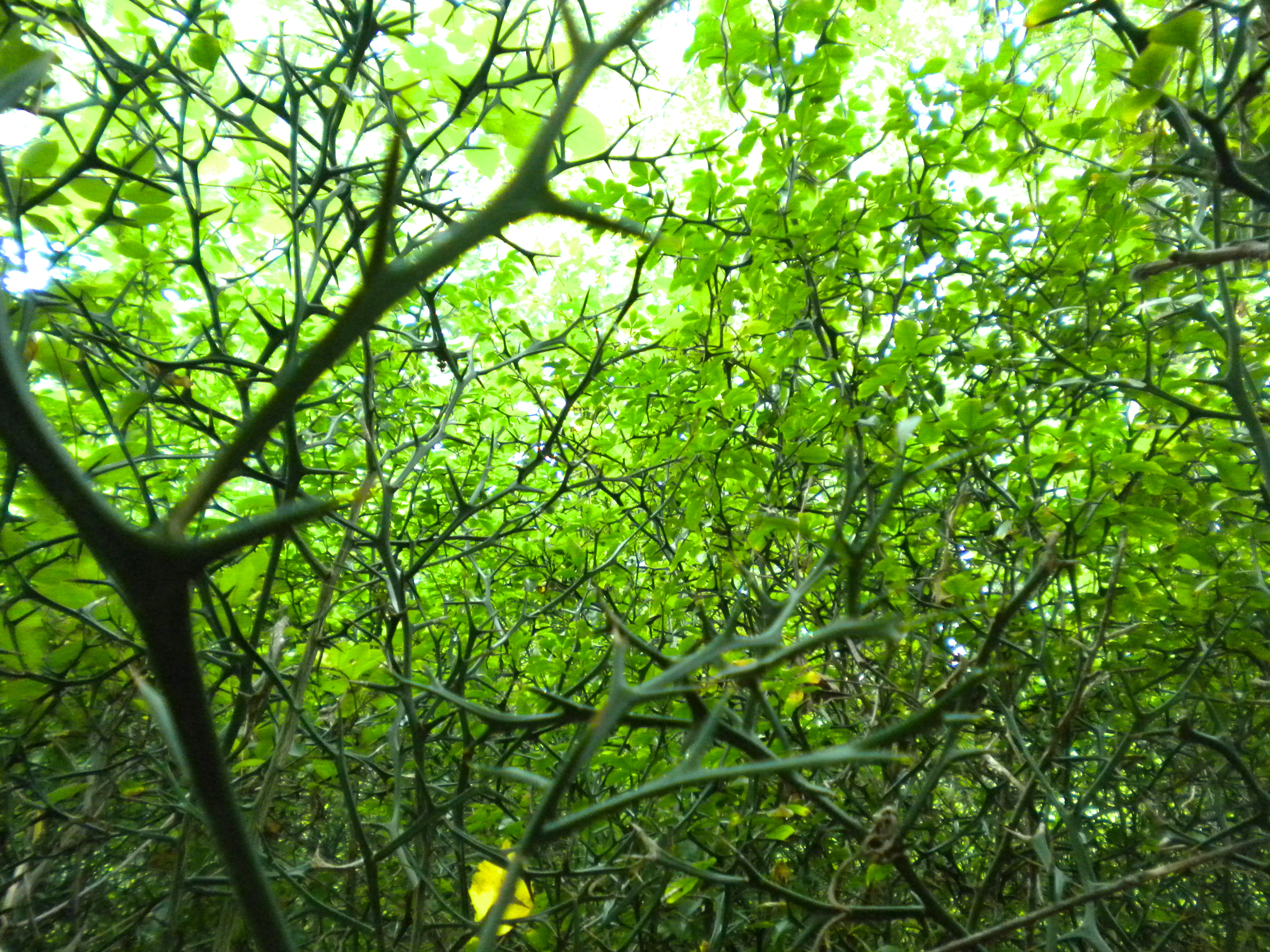
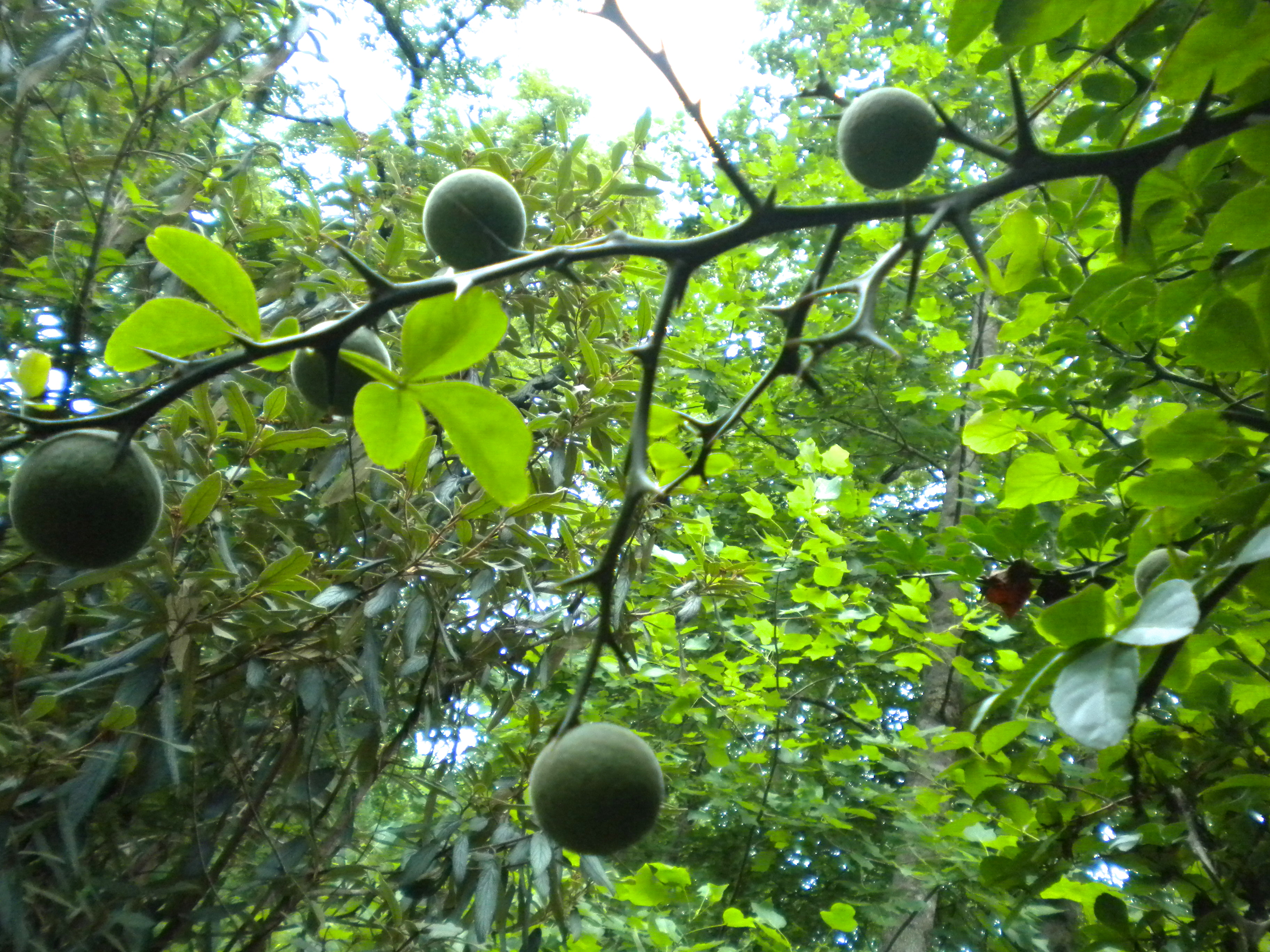
Of the prickly plants, Trifoliate Orange, (poncirus trifoliate) is the nastiest looking, with its large, spear-like thorns, but in this instance is fairly localized and easy to avoid. Also called Flying Dragon, it was brought to the West from Asia in the 1700’s and was used in the South as an impenetrable hedgerow. I can see why. I’m beginning to wonder if it might make an effective garden deterrent to suburban deer herds, though I’d be a bit suspicious of it’s invasive tendencies.
Blackberries!
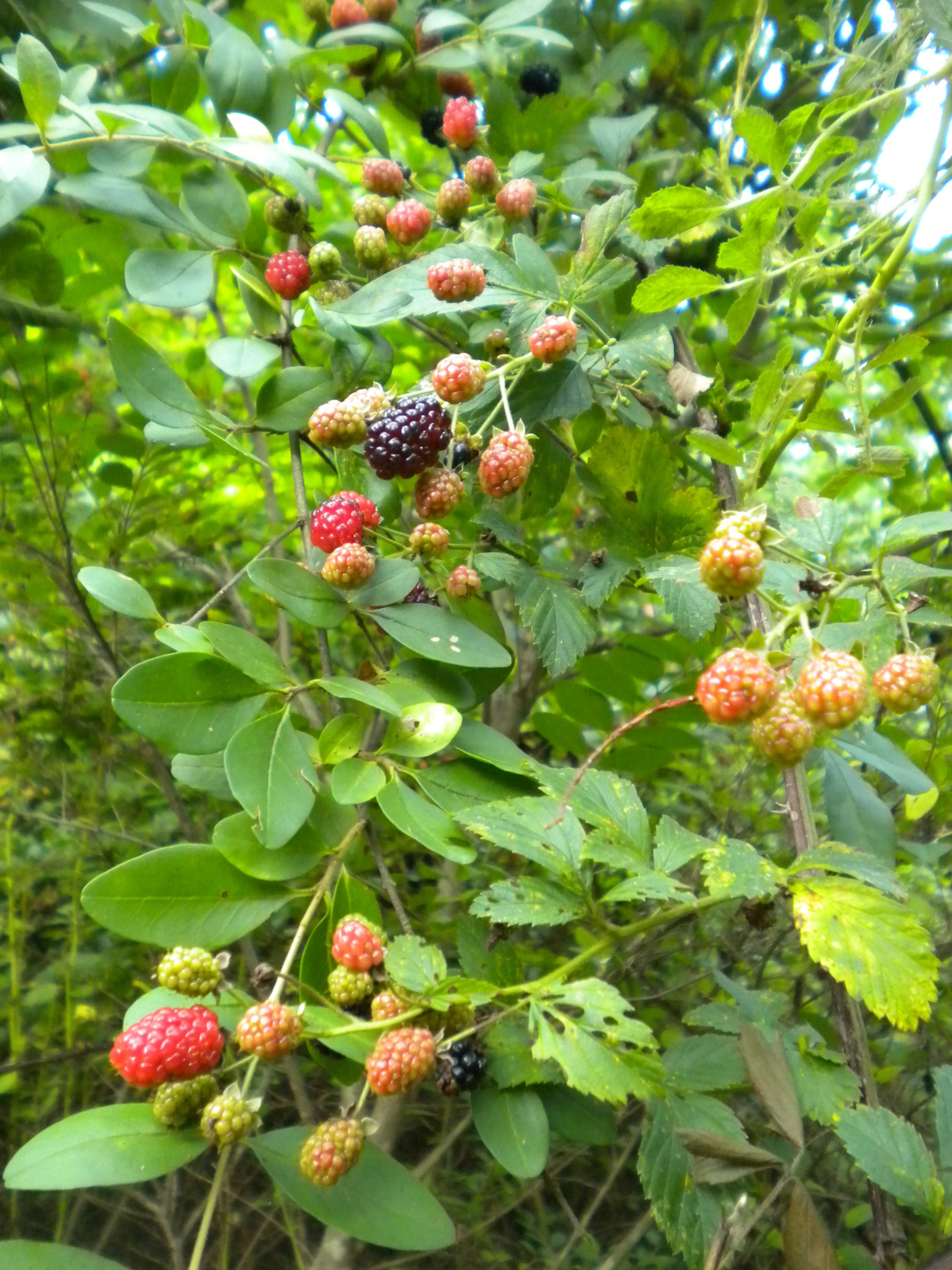
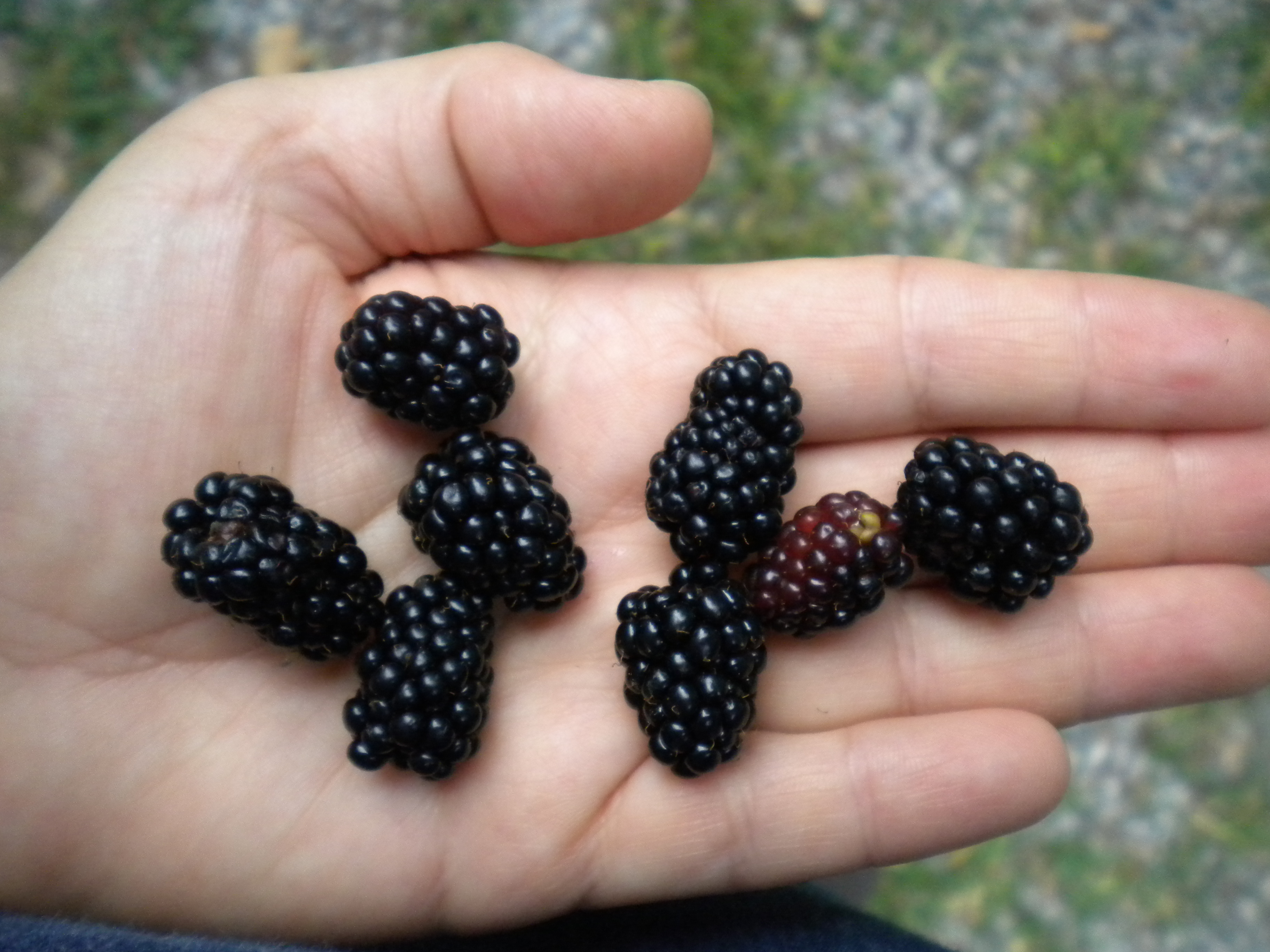
The most prolific briars in these fields are the blackberry bushes, (rubus fruticosus?). We’ve been collecting and eating these by the bucketful for several days now, looking for the biggest, fattest ones. It has been interesting to note that the domestic blackberries growing in the garden are much larger than the wild ones, with larger seeds, but not nearly as sweet. Our preference has been definitely for the wild. Time for a cobbler.
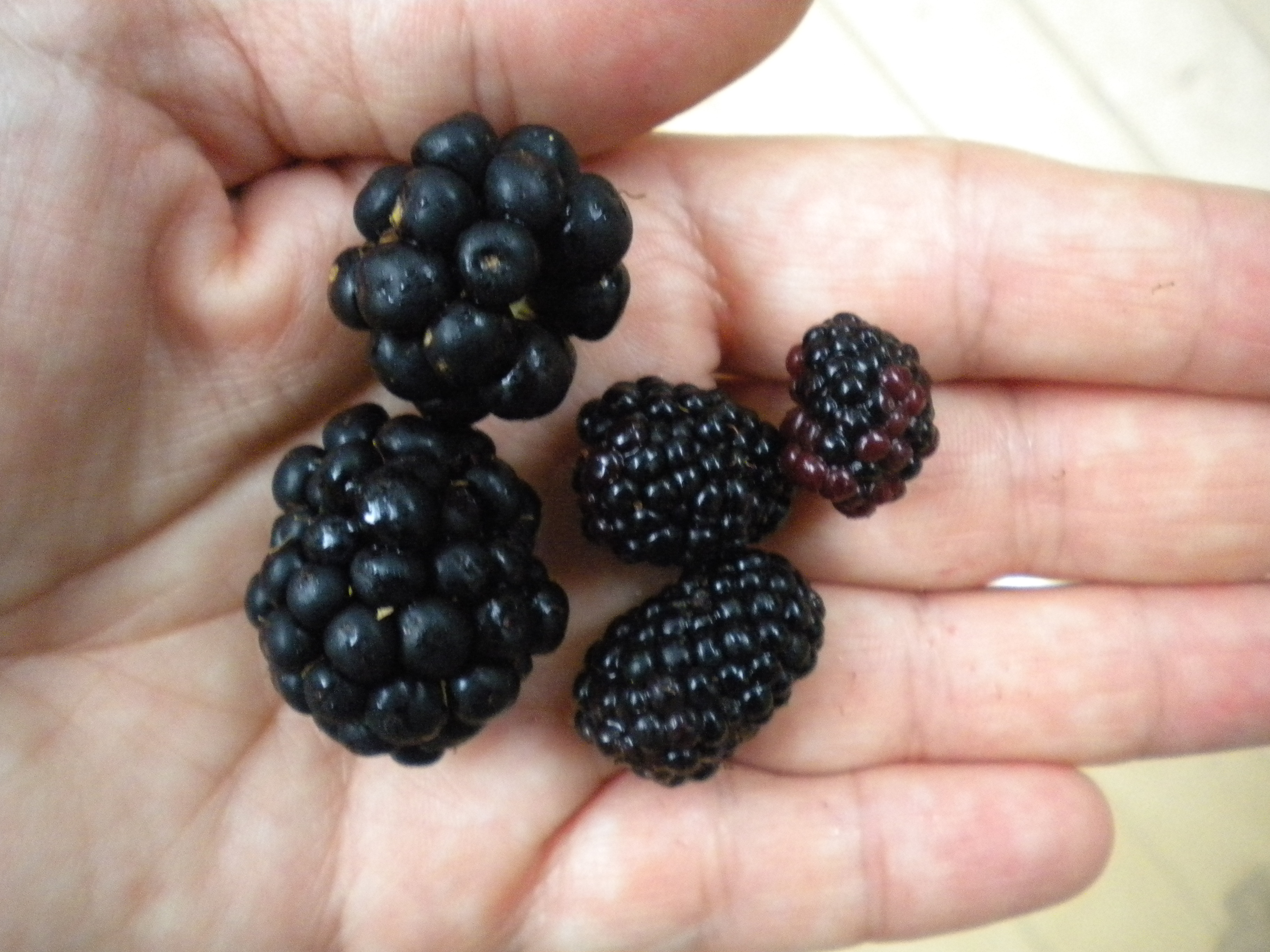 Garden berries on left, wild on right.
The blackberry’s sharp, leggy brambles are quite springy, notorious for their tenacity in sticking to clothing and stabbing through thick gloves if not handled gingerly. While cutting through a mass of the stuff with heavy, leather work gloves, I often found myself grabbed from behind by a branch, or have my hat taken from my head by a long stalk of the stuff. I began to think I was dealing with a consciousness more animal than plant-life.
Invasives
We made good progress over the course of a couple of days, but it was slow going. Among the invasives, we found a fast-growing tree from China, the Paulownia tomentosa, crowding out the little pines. A chainsaw is in order to eradicate this one, but that’s above my present capabilities.
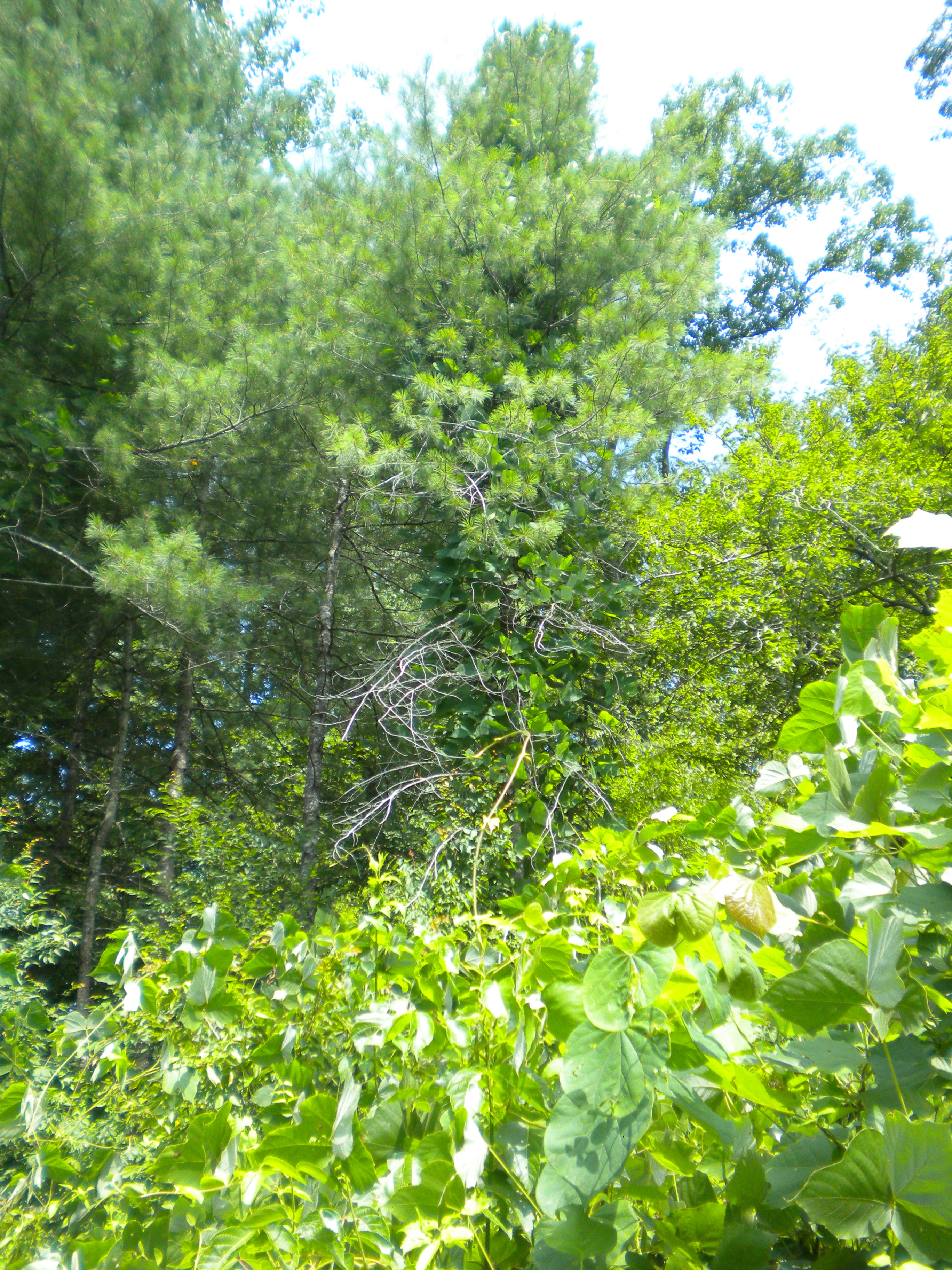 Paulownia is on the right, long-leaf pine on left.
Later, found that Scourge of the South – kudzu – taking over some larger white pines further in. Best dealt with in winter, I’m told. I’m exhausted just thinking about it.
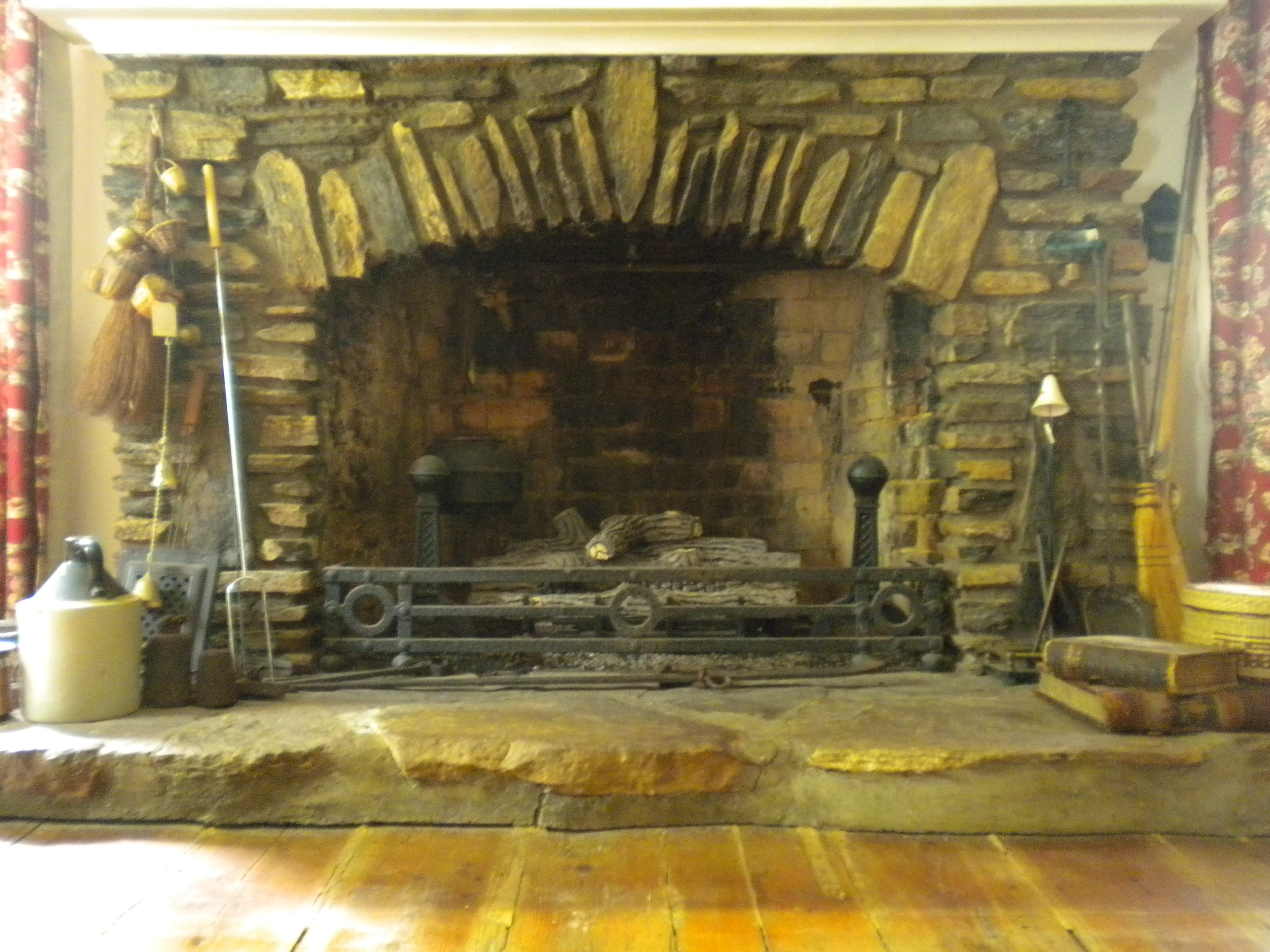
I’ve been taking some time away from behind the wheel to breathe some fresh air and collect mosquito bites. Drove seven hours or so south, to rural N.C., to the farm.
Predating the Civil war by two decades, the farmhouse has some charming, if somewhat challenging idiosyncrasies. It was originally built as a log cabin, added to in sections over the years into a rambling, two-story clapboard home with an impressive stone chimney. The interior is mostly natural wood paneling, knotty pine, and floorboards made of broad old wood. No wall or door jam is completely square and no floor is level, much to the delight of children with marbles and race cars. The focus of the living room is a large, open, stone fireplace which was once used for cooking and has now been converted to nearly convincing gas logs. The second story floorboards are the ceiling of the rooms below, so sound travels a bit too efficiently. The walls and windows are rather porous to humidity and temperature compared to contemporary standards, and the air conditioning works well enough for the modern sections of the house, though definitely not for the second floor. One feels the elements more intensely living here.
The place is rich in sounds, all times of night and day. One can hear a myriad of birdsongs in the early morning, insects buzzing all day and a chorus of frogs and crickets by the pond at night. I always liked falling asleep to the pond sounds.
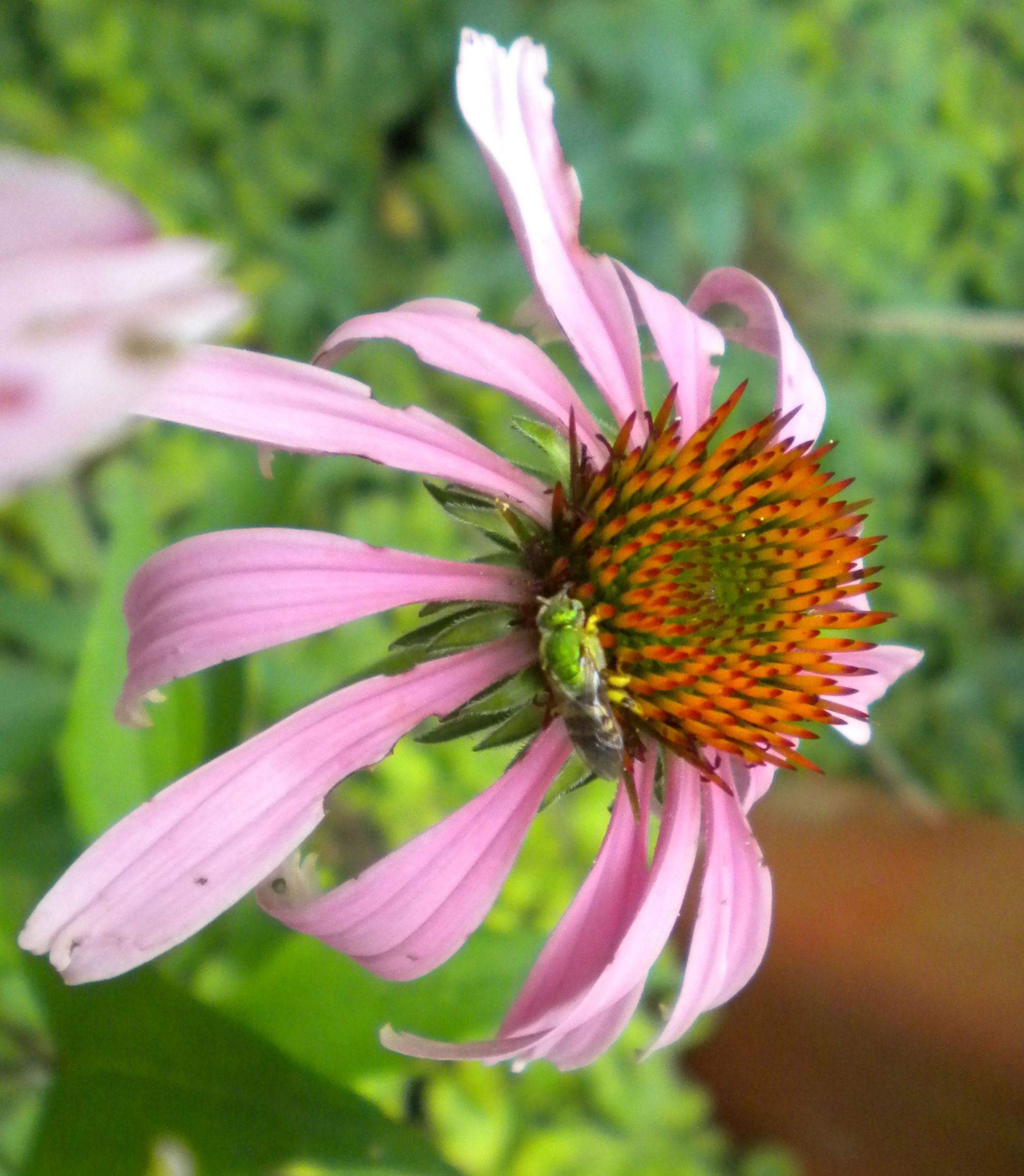
A small green pollinator.
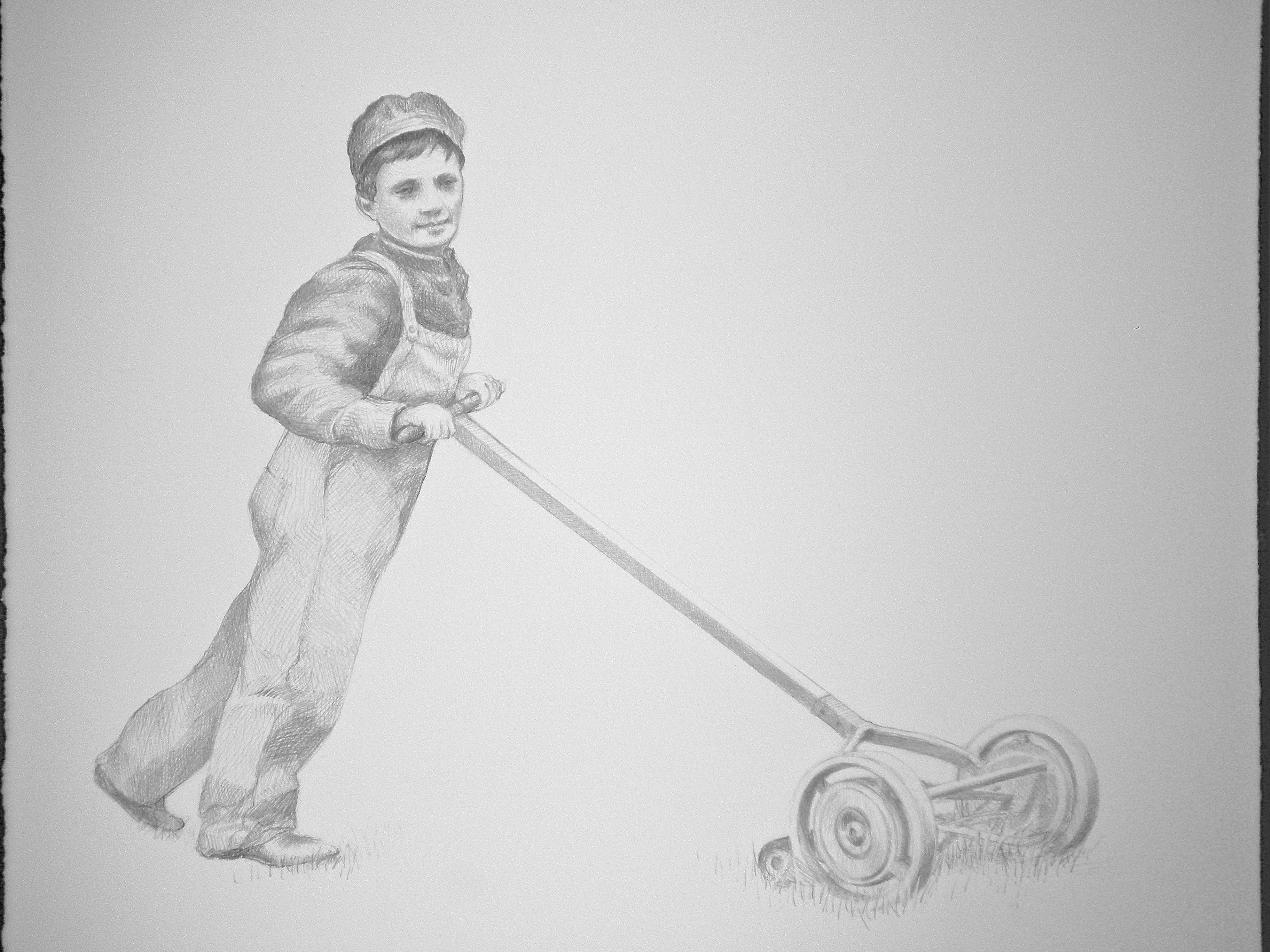
Reel Mower
15″ x 17″, graphite on paper, 2014
Physical labor used to be much more a part of our daily lives, and was not considered to be beneath middle class dignity as it is these days. Now we have machines to do everything, from manufacturing nearly every object in the known world, to feeding the cat or brushing your teeth.
Try mowing your lawn with a manual reel mower and see what kind of looks you get from the neighbors. I know. I’ve had some stares. Apparently, breaking a sweat is not to be done outside of prescribed places and activities, like the gym. If there’s a labor saving device available, there must be something wrong if you’re not using it.
I’ve found there are many benefits to mowing after dark, (which you can do with a manual mower relatively quietly) one of which is not getting unwelcome commentary and comes in handy if you happen to live in an area where the act of doing your own lawn is considered déclassé.
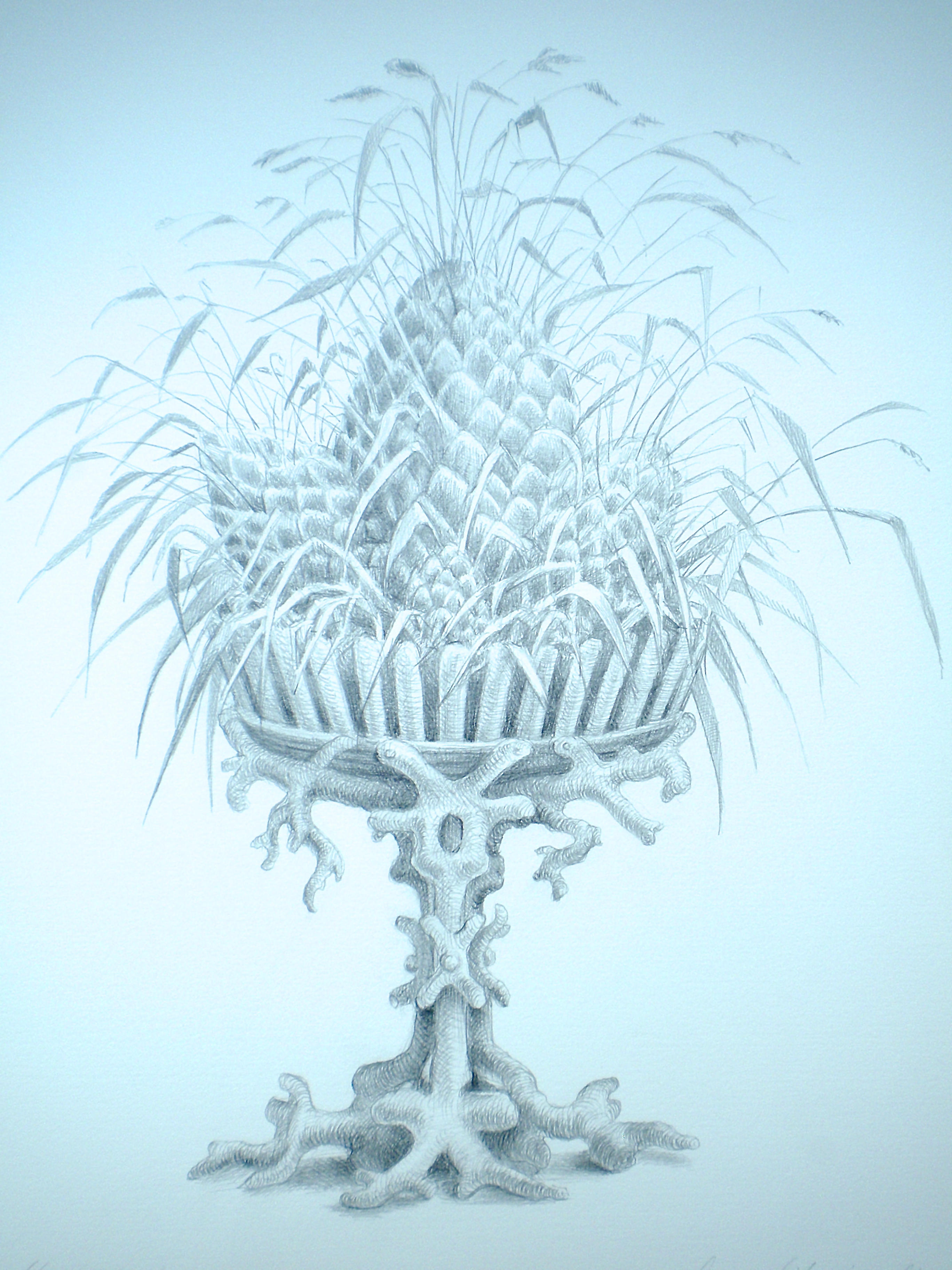
“Petit Jardin Rustique”
graphite on paper, 12″ x 15″, 2014
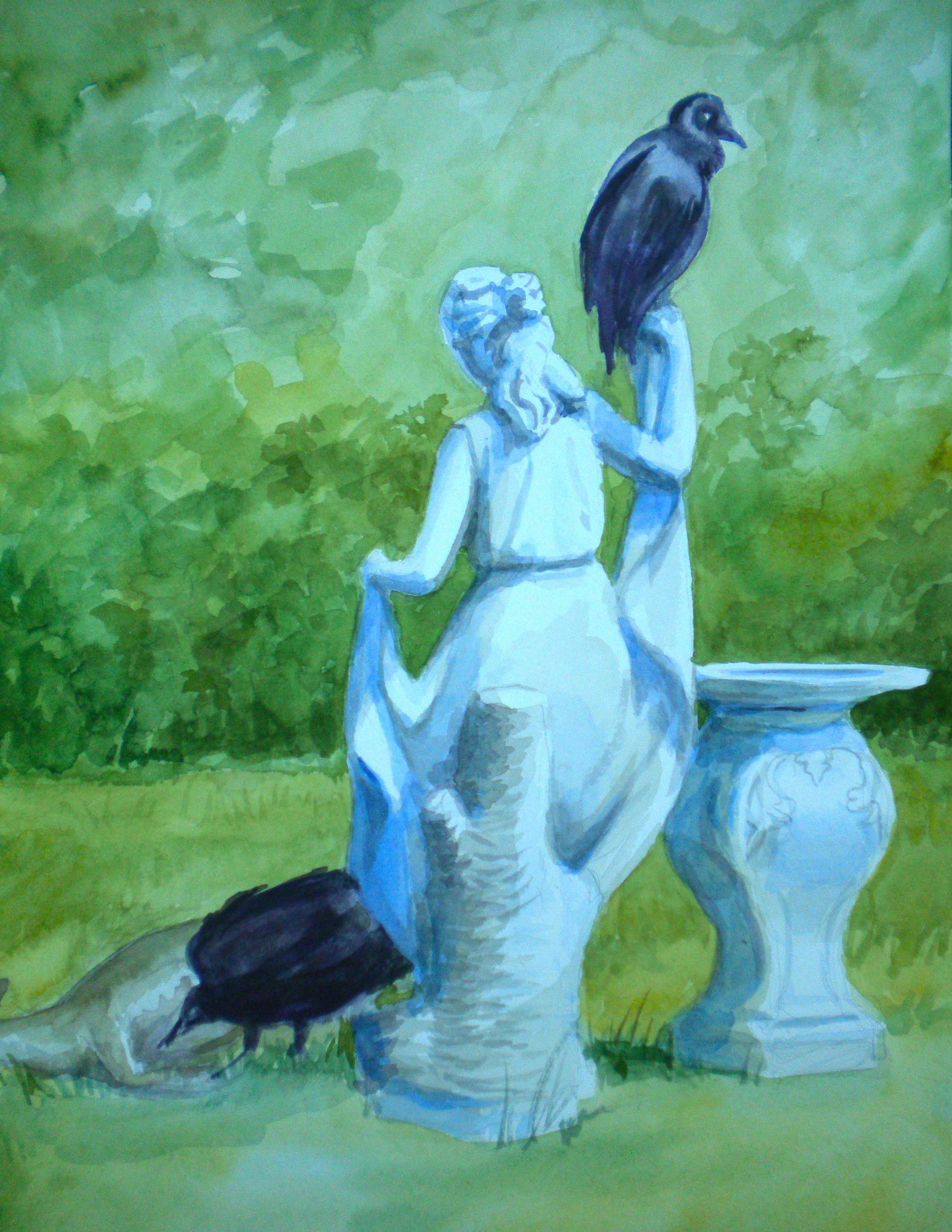
“Et in Arcadia”
watercolor, 11″ x 15″, 2014
This week in the studio.
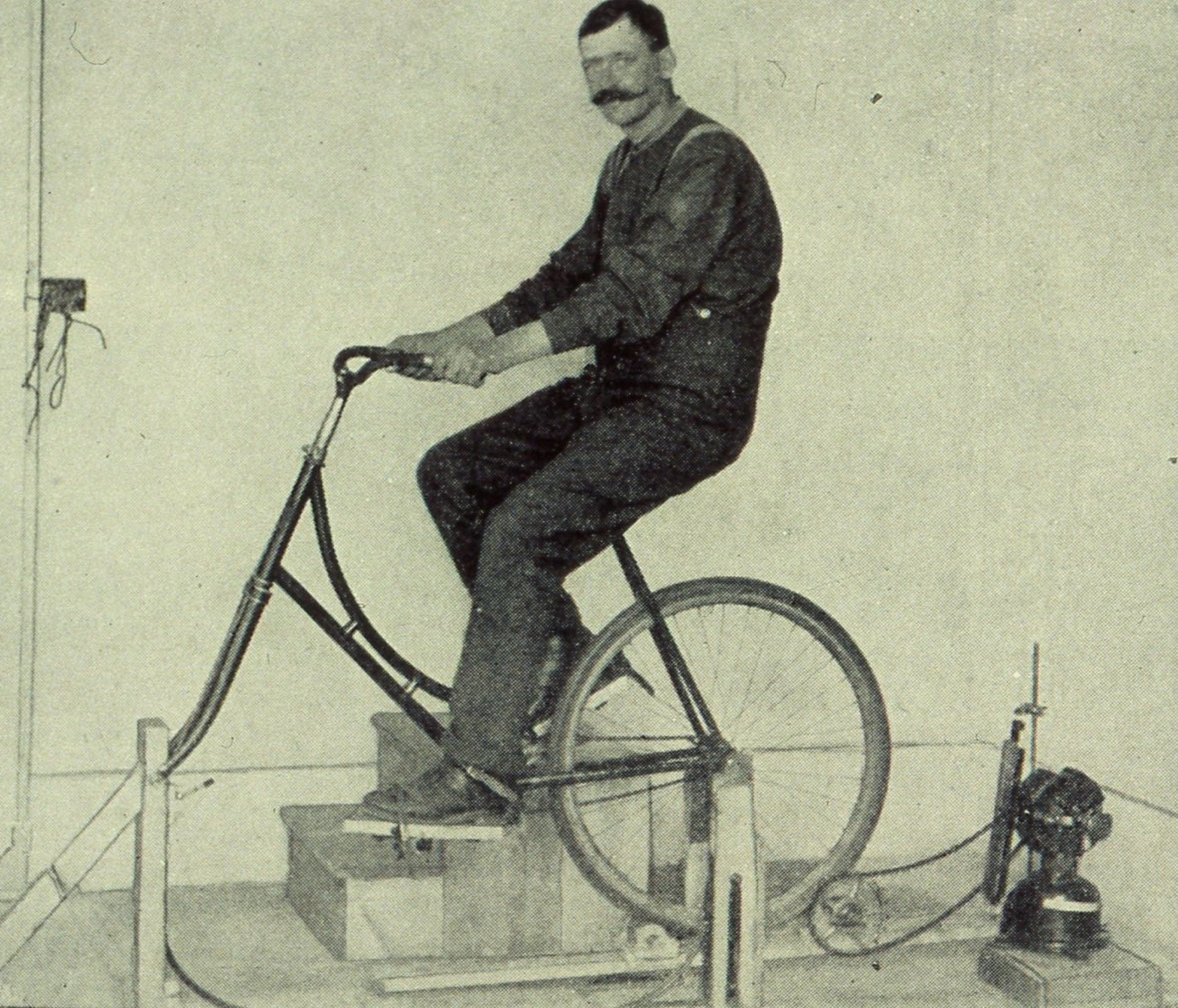
Man on a drop-frame bicycle converted to an exercycle, 1918.
I noticed the gym recently installed new motion sensor activated doors which I don’t have to use my new found strength to open, a fact I felt compelled to mention to the clerk at check in. I’ve often wondered about our devotion to labor saving devices coinciding with our dependence on exercise machines and gym classes. If only we could kill two birds with one stone and make our exercise routines useful in completing necessary tasks while we work out, like riding an exercycle to work.
In our aerobics class, we do an exercise called the “hay baler”, where you hold a weight and lift it from the ground diagonally over your head, repeatedly. Sometimes I wonder how many animals I could feed doing this, which I don’t have to do because I drive to the store to buy the machine fed, raised, slaughtered, packaged and shipped creature whose flesh is one of the reasons I’m doing “hay balers”.

“Somnambulant”
Graphite on paper, 22″ x 22″, 2013
During the regular course of taking my child to school and running errands, I drove 605 miles last week. It seemed like an inordinate amount of time and miles for what I was accomplishing. I was beginning to feel as if my car was another appendage, an interstate mobility prosthesis that gave me not only super-human strength and ability, but was beginning to alter the spots where it contacted my body. I feel as if my body might actually begin to resemble a car seat, if it weren’t for the trips I’ve been taking to the gym, which I drive to.
There are many things our technologies promise, mostly making our lives easier in some significant way, but we seldom examine what we give up for that promise.
 KARA HAMMOND: OPEN STUDIO